AgriSound, JHI and HSS Launch Precision Pollination Project to Accelerate Breeding and Boost Productivity in UK Fruit Production
A major new UK research and innovation project has begun, aiming to make pollination in commercial fruit production measurable, manageable and more resilient. Running from 1 July 2026 to 30 June 2028, Precision Pollination to Accelerate Breeding and Boost
Productivity in Fruit Production is led by AgriSound with the James Hutton Institute and James Hutton Ltd, supported through Defra’s Farming Innovation Programme in partnership with Innovate UK.
Pollination is essential to fruit set, quality and marketable yield, but it is still often managed using observation, standard hive-density guidance and assumptions that pollination is sufficient. Weather variability, changing pollinator populations and uneven activity across
commercial production areas can leave growers with little objective evidence about where pollination gaps occur or when action is required.
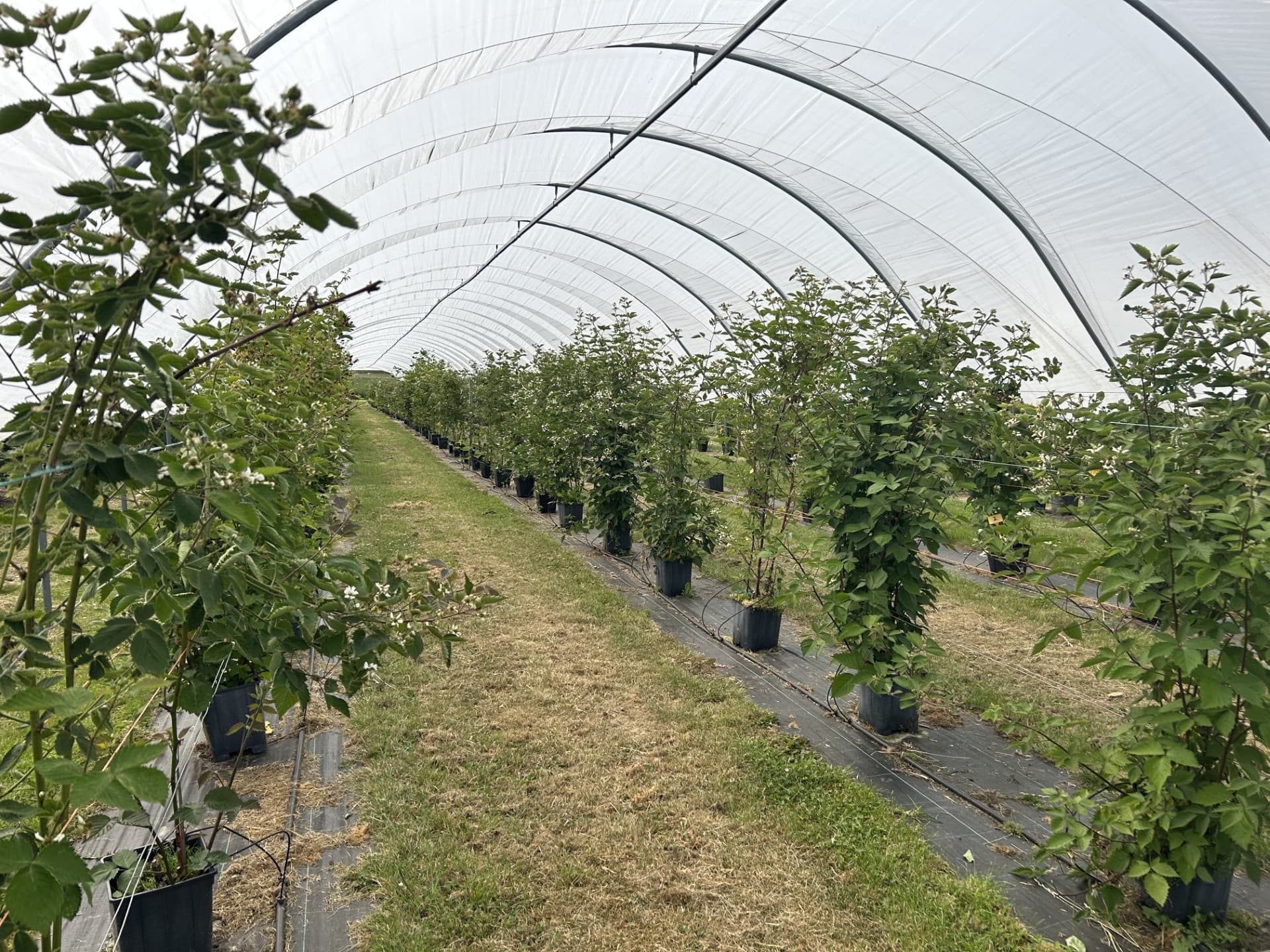
The project will build on AgriSound’s existing Precision Pollination system, which uses its Polly™ bioacoustic sensors and AI analytics to monitor pollinator activity within crops. The consortium will extend the approach beyond bumblebee monitoring in strawberries, developing and validating a multi-species, multi-crop system for honeybees, bumblebees, solitary bees and hoverflies across fruit crops including strawberries, blueberries, raspberries, blackberries and cherries.
Turning pollinator activity into practical decisions
Commercial farm deployments and controlled trials at the James Hutton Institute will combine acoustic monitoring, smart-tag observations, time-lapse imaging, environmental data and crop performance measurements. These datasets will be used to refine detection
algorithms, understand how pollinator activity changes across crops and production systems, and identify links with fruit set, yield and quality.
For growers, the aim is to translate this evidence into clearer decisions on hive placement, pollinator selection, colony management and the timing of interventions. The work will also investigate the minimum sensor density needed for reliable farm-scale insight, supporting a
more economical and scalable commercial service.
For breeders, the project will examine how flower traits and plant genotypes influence pollinator attraction and pollination efficiency. This could provide a new source of evidence for selecting fruit varieties that combine strong commercial performance with greater pollinator attractiveness and resilience under changing climatic conditions.
Expected project outputs
● Improved acoustic and AI models for key managed and wild pollinator groups.
● A live dashboard, validated datasets and practical guidance for identifying pollination gaps and optimising deployment.
● New evidence linking flower morphology, plant genotype, pollinator behaviour and crop performance.
● Farm-scale trials, sensor-density optimisation and return-on-investment assessments across multiple fruit crops.
● Demonstrations, workshops, webinars and guidance materials for growers, breeders, advisers and the wider horticulture sector.
By replacing assumptions with objective measurement, the consortium aims to help fruit businesses improve pollination consistency, reduce production risk and use pollination resources more efficiently, while supporting biodiversity and climate resilience across the UK
horticulture sector.
Dr Casey Woodward, CEO of AgriSound:
“Pollination is mission-critical to fruit production, but it is still too often managed by assumption. We are very happy to be working with JHL and JHI in this project to support not just fruit producers but also breeders. Our goal is to make precision pollination scalable across crops and useful as a day-to-day production tool.”
Dr Susan McCallum, soft fruit geneticist and breeder at the James Hutton Institute:
” We are excited to be working with AgriSound on this innovative project, combining cutting-edge technology with data driven insight to better understand pollination and its impact on soft fruit productivity. This collaboration has the potential to deliver valuable, real-world insights that will help growers and breeders make more informed decisions and build a more resilient and sustainable future for fruit production.”
Dr Ian Archer, Managing Director, Hutton Scientific Services
“Hutton Scientific Services is here to connect science with the businesses that depend on it, and precision pollination is a compelling example of why that matters. Our job is to turn world-class science into real world value, coordinating delivery so the outputs are practical,
commercially credible and built around the decisions producers actually face.”
Enhance your crops with precision pollination
Discover how AgriSound’s bioacoustic sensors and AI analytics provide real-time pollination and biodiversity intelligence for commercial growers and advisors.
Keep Reading
Recent Stories & Releases
AgriSound and UK Berry Growers Launch ADOPT Smart Pollination Project
AgriSound is pleased to announce the launch of a major new grower‑led innovation project funded through the Innovate UK ADOPT…
AgriSound Secures Funding for Groundbreaking Pollination Project in Strawberries
AgriSound has been awarded funding as part of the Innovate UK Full ADOPT Grant Round 3 to support a pioneering…

International food group Importaco partners with AgriSound on regenerative almond farming project
AgriSound has launched a major European field trial with international food group, Importaco, to measure how regenerative farming affects pollination…